|
ProSticks - Learning Curve
Hong Kong Economic Time --- June 22, 2000
Day Trading Using Modal Count
The Modal Count is the amount of time the market has spent trading at the Modal
Point. When the Modal Count is very high, it means that the tug-of-war between
the bulls and the bears at the Modal Point is very intensive, causing the market
to spend a lot of time trading there. One way to quantify whether the Modal
Count is high is to compare it with the 150-day Modal Count average.
On days when the market is trending, either the buying or the selling force
dominates. The Price rises or falls continuously throughout the entire day and
does not spend much time trading at any particular price. The Modal Counts
during these days are usually lower than average.
On the other hand, when the trend is near the end, the prevailing buying or
selling force gradually becomes exhausted while the opposite force becomes
stronger and stronger. The market spends a lot of time trading at a narrow range
and the Modal Count is usually higher than average.
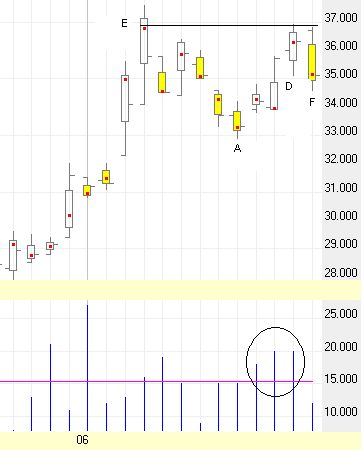
The chart below shows the ProSticks chart for Dao Heng Bank (0223) accompanied
by its Modal Count plot. Notice that from A to D, the
market is rising. The Modal Counts are high and above
the 150-day average. This signifies a fierce competition between the bulls and
the bears, a symptom of a potential market top, at least for the short-term. Then,
at D, the price encountered the Modal Point of E, which was a
previous major top. The bears rush in and drive the price downwards and on
the very next day, the price continued to fall sharply.
It is still premature to conclude whether the stock will undergo a bear
trend. However, when investors observe the bearish Modal Count pattern from
A to D, and the fact that D appeared to have received strong
resistance from the previous major top of E, investors should be cautious
if planning on entering the market at F.

|